
Sandalwood Benefits: How This Ancient Wood Quiets Your Mind and Deepens Your Sleep
There's a reason sandalwood has been burned in temples, monasteries, and meditation halls for over four thousand years. Long before anyone could explain why, people understood that this warm, creamy, woody scent did something to the mind that other fragrances couldn't.
It made the noise stop.
Not literally, of course. But the experience of sitting with sandalwood — breathing it in slowly, letting it settle — creates a kind of internal quiet. The restless thoughts soften. The body unwinds. Sleep comes more easily. Focus sharpens without tension.
Modern neuroscience is now beginning to explain what ancient practitioners always knew intuitively. Sandalwood isn't just pleasant. It's pharmacologically active. And the way you experience it matters more than you might think.

What Is Sandalwood, Exactly?
Sandalwood comes from the heartwood of trees in the Santalum genus — slow-growing, semi-parasitic trees that take decades to develop the dense, oil-rich core that produces their famous fragrance.
The most prized variety is Indian sandalwood (Santalum album), native to the Indian subcontinent. Its heartwood contains the highest concentration of santalol — the compound primarily responsible for sandalwood's therapeutic and aromatic properties. Indian sandalwood has been used in Ayurvedic medicine, Traditional Chinese Medicine, and Tibetan healing practices for millennia. Its Sanskrit name, Chandana, literally means "wood for burning incense."
Australian sandalwood (Santalum spicatum) is another widely used variety. It grows in Western Australia and has a slightly spicier, drier scent profile compared to the creamier, sweeter Indian variety. Due to overexploitation of Indian sandalwood forests, Australian sandalwood has become an important and more sustainable alternative.
What makes sandalwood unique among aromatic woods is the character of its scent. Where Palo Santo is bright and citrusy, and Cedar is dry and sharp, sandalwood is deep, warm, and enveloping — like being wrapped in a soft, warm blanket made of wood and vanilla. It's a base note in perfumery, meaning it lingers long after other scents have faded. And unlike many fragrances that can become overwhelming, sandalwood tends to grow more beautiful the longer you sit with it.
The Science: What Sandalwood Does to Your Brain
The reason sandalwood feels so calming isn't just psychological. Research shows that its key compounds interact directly with the nervous system.
Alpha-Santalol: The Active Compound
The primary bioactive component in sandalwood is alpha-santalol (α-santalol), which makes up roughly 45–55% of high-quality sandalwood essential oil. This compound is responsible for most of sandalwood's documented therapeutic effects.
When you inhale sandalwood's aroma, the volatile molecules travel through the olfactory bulb — the brain's smell-processing center — which connects directly to the limbic system. This is the part of the brain that governs emotion, memory, and arousal. Unlike most sensory input, smell bypasses the brain's usual relay stations and reaches the emotional centers almost instantly. That's why a single whiff of a familiar scent can trigger a vivid memory or a sudden shift in mood.
Relaxation Without Sedation
Here's what makes sandalwood particularly interesting: it appears to promote relaxation without causing drowsiness or mental fog.
A 2023 study examining the effects of inhaling Indian sandalwood essential oil found that participants reported increased attentiveness and improved task performance — even as they felt more relaxed. This is an unusual combination. Most calming substances (like lavender or chamomile) tend to reduce alertness along with anxiety. Sandalwood seems to calm the nervous system while keeping the mind sharp.
Researchers attribute this to sandalwood's effect on beta and gamma brain waves — the frequencies associated with focused attention and higher cognitive processing. Instead of suppressing brain activity the way a sedative would, sandalwood appears to regulate it, reducing the chaotic "noise" of stress while preserving clarity.
Stress Reduction
Multiple studies have documented sandalwood's ability to lower physiological markers of stress. Research has shown that after inhaling sandalwood oil, participants exhibited lower blood pressure and reduced cortisol levels — the body's primary stress hormone. The effect is attributed to sandalwood's activation of the parasympathetic nervous system (the "rest and digest" system), which counteracts the fight-or-flight response.
A pilot study published in Natural Product Communications found that Indian sandalwood oil induced relaxation at the physiological level when inhaled during stressful experiences, and that inhalation resulted in more rapid recovery after stress exposure.
Sleep Enhancement
Sandalwood's relationship with sleep is one of its most studied benefits.
A landmark 2007 study published in the Japanese Journal of Psychopharmacology found that santalol — sandalwood's primary compound — produced significant sedative effects when inhaled. Specifically, it decreased total waking time and increased non-rapid eye movement (NREM) sleep time in subjects. NREM sleep is the deep, restorative phase of sleep that's critical for physical recovery and memory consolidation.
What's especially noteworthy is that this effect appeared to work through more than just the olfactory system. When researchers impaired the subjects' sense of smell, the sleep-enhancing effects persisted — suggesting that santalol may also act directly on the central nervous system through absorption, not just through scent perception.
Sandalwood activates the parasympathetic nervous system, helping to lower heart rate and promote the physical relaxation that prepares the body for sleep. For anyone who lies awake at night with a racing mind, this gentle downregulation of the nervous system can be the difference between tossing and turning and drifting off naturally.
The Five Core Benefits of Sandalwood
Based on both traditional use and modern research, sandalwood's benefits cluster around five key areas:
1. Deep Relaxation
Sandalwood's warm, grounding aroma works directly on the emotional centers of the brain. It doesn't just mask stress — it physiologically counteracts it by shifting the nervous system from a sympathetic (fight-or-flight) state to a parasympathetic (rest-and-restore) state. This makes it ideal for unwinding after a long day, processing difficult emotions, or simply creating a sense of peace in your space.
2. Better Sleep
Through its effects on NREM sleep and its ability to quiet mental activity, sandalwood supports not just falling asleep but sleeping more deeply. Unlike pharmaceutical sleep aids, it doesn't suppress REM sleep or leave you groggy in the morning. It works with your body's natural rhythms, not against them.
3. Focused Clarity
This is sandalwood's most counterintuitive benefit. While it relaxes the body, it simultaneously sharpens the mind. For thousands of years, monks and meditators have burned sandalwood during practice precisely because it helps achieve a state that's both calm and alert — what Buddhists call "relaxed concentration." Modern EEG studies suggest a neurological basis for this: sandalwood modulates brain wave activity in ways that reduce anxiety without reducing focus.
4. Emotional Grounding
Sandalwood is classified as a "grounding" scent in aromatherapy — meaning it helps bring you back to center when you feel scattered, anxious, or emotionally overwhelmed. This grounding quality is why it has been central to spiritual practices across Hindu, Buddhist, Sufi, and other contemplative traditions. It doesn't elevate your mood in the way citrus or mint oils do; instead, it settles and stabilizes it.
5. Spiritual and Meditative Support
Every major contemplative tradition that has access to sandalwood has incorporated it into practice. Hindu temples burn it as an offering. Buddhist monasteries use it during meditation. Sufi practitioners incorporate it into remembrance rituals. The common thread is that sandalwood creates an atmosphere conducive to introspection, presence, and connection with something beyond the ordinary.
Whether or not you have a spiritual practice, this quality translates into everyday life as a sense of intentionality — a feeling that the moment you're in matters, and that slowing down is not a waste of time but an act of care.
Indian Sandalwood vs. Australian Sandalwood: What's the Difference?
If you're choosing sandalwood for the first time, it helps to understand the two main varieties available.
| Indian Sandalwood (Santalum album) | Australian Sandalwood (Santalum spicatum) | |
|---|---|---|
| Origin | India (Karnataka, Tamil Nadu) | Western Australia |
| Scent profile | Rich, creamy, sweet, deeply woody | Drier, spicier, slightly sharper |
| Alpha-santalol content | Higher (~45–55%) | Lower (~15–25%) |
| Therapeutic potency | Traditionally considered superior | Effective alternative with proven benefits |
| Sustainability | Endangered in the wild; plantation-grown varieties available | More abundant; sustainably wildcrafted |
| Price | Premium (significantly more expensive) | More accessible |
| Best for | Deep meditation, sleep, luxury experiences | Everyday use, focus, grounding |
Both varieties are effective for aromatherapy. Indian sandalwood is richer and more complex, while Australian sandalwood is more accessible and has a cleaner, more direct scent. A study published in Natural Product Communications confirmed that Australian sandalwood oil demonstrated relaxation effects comparable to Indian sandalwood, making it a credible and more sustainable alternative.
How to Use Sandalwood at Home
Sandalwood comes in several forms, and the method you choose affects the experience significantly.
Burning Sandalwood (Traditional Method)
The most common approach is burning sandalwood chips or sticks directly. You light the wood, let it catch, then blow out the flame so it smolders and releases smoke.
This works, but it has drawbacks. Combustion destroys a significant portion of the aromatic compounds before they reach your nose. What you smell is a mixture of sandalwood's essential oils and the byproducts of burning — carbon, soot, and particulate matter. The scent is smoky and pleasant, but it's not pure sandalwood. It's sandalwood filtered through fire.
For people in apartments, this method also triggers smoke alarms and leaves residue on walls and fabrics.
Essential Oil Diffusers
Electric ultrasonic diffusers break sandalwood essential oil into a fine mist using water and vibration. This method is convenient and smokeless, but it dilutes the fragrance significantly and adds moisture to the air. The scent is lighter and more diffuse — fine for general ambiance but lacking the depth and warmth that makes sandalwood special.
High-quality sandalwood essential oil is also expensive — often $60 to $100+ for a small bottle of genuine Indian sandalwood oil — making this method costly for regular use.
Warming Sandalwood Chips (The Purest Method)
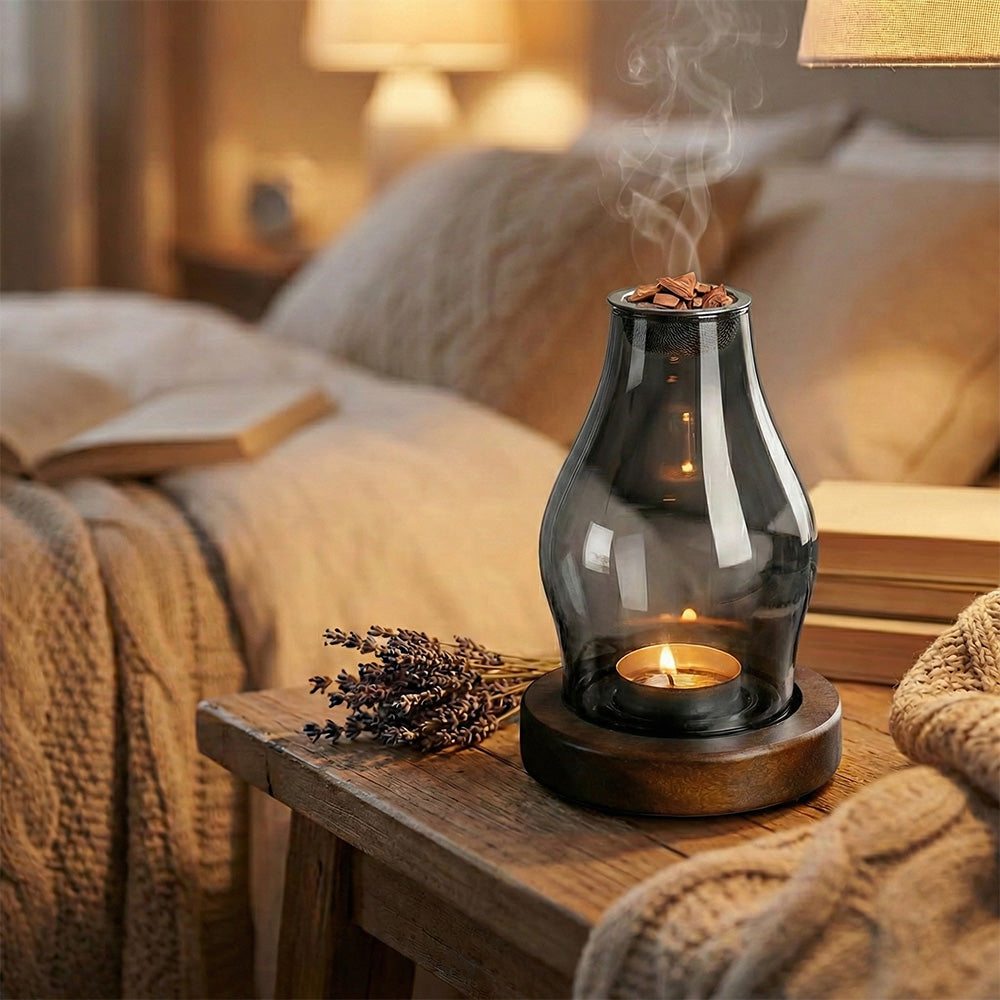
Warming is the method that delivers the truest sandalwood experience. You place sandalwood chips on a metal mesh screen above a gentle heat source (such as a tealight candle). The indirect heat brings the wood to the temperature range where its essential oils begin to evaporate — typically 60–150°C — without ever reaching the combustion point.
The result is remarkable. Warmed sandalwood smells different from burned sandalwood. The smoky harshness disappears entirely, replaced by layers of cream, vanilla, soft wood, and a subtle sweetness that unfolds over hours. You're experiencing the wood's actual essential oil vapor — the same molecules that give sandalwood its therapeutic benefits — without any interference from combustion byproducts.
This is the method that most closely mirrors the Japanese art of Koh-do (聞香, "listening to incense"), where connoisseurs heat precious woods on mica plates over buried charcoal, evaluating the scent with the attentiveness of a sommelier tasting wine.
It's also the approach behind Wispoak. Our Botanical Warmer uses a tealight candle to gently warm sandalwood chips (and other sacred woods like Palo Santo and Cedar) on a metal mesh screen, housed in a handcrafted black walnut and borosilicate glass body. The wood never burns. The fragrance never compromises. And the warmer's own walnut body releases its own subtle scent as it heats — adding a layer of warmth that completes the experience.
Building a Sandalwood Ritual for Better Sleep
If better sleep is your goal, here's a simple evening practice using warmed sandalwood:
60 minutes before bed: Place a small amount of sandalwood chips on your warmer's mesh screen and light the tealight. Let the fragrance begin filling your bedroom while you go about your evening routine.
30 minutes before bed: Dim the lights. The warm glow of the tealight creates a natural transition signal — your brain begins associating this light and scent with the approach of sleep. Put away screens. Let the sandalwood work.
As you lie down: The fragrance will be fully present in the room by now — warm, enveloping, unhurried. Focus on the scent as you breathe. Don't try to analyze it. Just notice it. This simple act of attention anchors your mind in the present moment, short-circuiting the rumination cycle that keeps most people awake.
Let the tealight burn out naturally. Most tealights last 4–6 hours, meaning the fragrance will continue working while you sleep through your first few sleep cycles — the period when deep NREM sleep is most critical.
Over time, this routine creates a powerful association. Your brain learns that sandalwood plus dim light equals sleep. The ritual itself becomes a signal — more effective and far gentler than any pill.
Sandalwood for Focus and Work
Sandalwood's unusual ability to calm without sedating also makes it valuable during focused work.
If you work from home, warming sandalwood chips at your desk creates an environment that reduces stress-related distraction while maintaining alertness. Unlike coffee, which achieves focus through stimulation (and often comes with jitters and crashes), sandalwood achieves focus through regulation — quieting the parts of your brain that generate anxiety and mental clutter, so the parts responsible for clear thinking can do their work.
This is particularly useful for creative work, deep reading, writing, or any task that requires sustained, non-anxious concentration.
Frequently Asked Questions
How long does the scent of warmed sandalwood last?
A single session of warming sandalwood chips typically produces fragrance for 2 to 4 hours, depending on the amount of wood and the heat source. The chips can be reused across 3 to 5 sessions before the scent fully fades.
Is sandalwood safe for pets?
Sandalwood is generally considered one of the safer aromatic woods around pets. However, birds are especially sensitive to airborne compounds, so avoid using any aroma-releasing products near birds. For cats and dogs, the smokeless warming method is safer than burning, as it produces no particulate matter.
Does sandalwood help with anxiety?
Research suggests yes. Multiple studies have found that inhaling sandalwood oil correlates with lower cortisol levels, reduced blood pressure, and self-reported decreases in anxiety. It's not a replacement for professional treatment, but as a complementary tool, it has meaningful evidence behind it.
What's the difference between sandalwood chips and sandalwood essential oil? Sandalwood chips are the actual heartwood, cut into small pieces. When warmed, they release their essential oils naturally and gradually. Sandalwood essential oil is the concentrated extract, obtained through steam distillation. Chips offer a gentler, longer experience and are more cost-effective; essential oil is more concentrated and versatile but significantly more expensive for genuine varieties.
Can I mix sandalwood with other woods?
Absolutely. Sandalwood blends beautifully with Palo Santo (adding brightness to sandalwood's depth), Cedar (creating a full-spectrum woody experience), and Hinoki (adding a clean, forest-like freshness). Blending is one of the joys of botanical warming.
Is sandalwood sustainable?
Wild Indian sandalwood (Santalum album) has been severely overexploited and is classified as vulnerable. However, plantation-grown Indian sandalwood (particularly from Australia) offers a sustainable source. Australian sandalwood (Santalum spicatum) is more abundant and is harvested from naturally fallen or dead trees. Always buy from suppliers who can verify sustainable sourcing.
Why Warming Is the Best Way to Experience Sandalwood
Every method of experiencing sandalwood — burning, diffusing, warming — delivers some version of its benefits. But warming stands apart because it preserves the complete molecular profile of the wood's essential oils.
When you burn sandalwood, combustion destroys a portion of the delicate compounds that give it complexity. When you diffuse the essential oil, you're working with a processed extract diluted in water. When you warm the raw wood chips, you're experiencing the full, unaltered spectrum of what the tree spent decades producing.
The same alpha-santalol that researchers have studied for sleep, relaxation, and focus — you're inhaling it intact, exactly as the wood intended to release it. No processing, no dilution, no combustion. Just heat and time.
This is what makes sandalwood warming not just a fragrance choice but a wellness practice. The wood is the medicine. The warmth is the delivery system. And the ritual of preparing it — selecting the chips, placing them on the screen, lighting the tealight, waiting — is itself a form of meditation.